
What We Go Back For
Third in a series on the past, presence, and the work of tracking
We usually name the danger of the past as its pain. The trigger that fires. The wound that won't close. The grief that ambushes us at 3am. The first two posts in this series explored what that pain is for. The Tracker's Now argued that presence is not escape from the past but contact with what the past left in us. Audre Lorde at the Threshold followed her discovery that the way through pain is to let it flow rather than resist it, and then to act anew. In both, the painful past is not the enemy. It is the invitation. When you are triggered, something unintegrated is surfacing, asking to be felt and finally completed. This book calls that a gift.
So if the painful past is an invitation, is there a danger at all? There is. In fact there is more than one. But one of them hides better than the rest, and it is not where we would expect to find it.
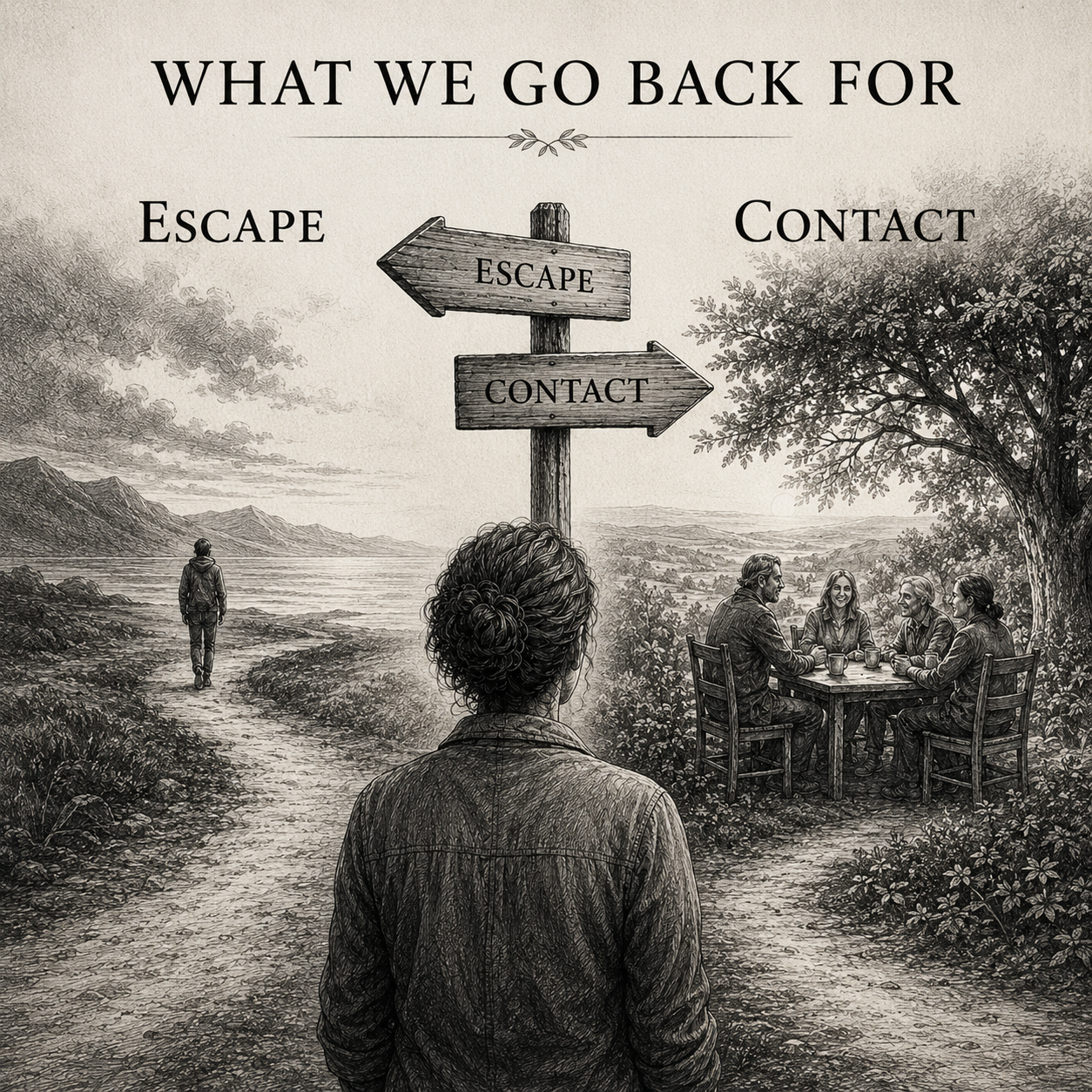
We have already seen that the painful past is the invitation. One danger lives in the sweet past, in how we return to our pleasant memories. The same reach can bring us into contact with what we feel or help us escape it, and from the outside the two look almost identical. That is the question to hold as we go: not whether a memory is sweet, but whether we are using it to make contact or to flee.
Start with the flight, because it hides best. Something is bothering us. We are triggered, activated, uneasy. And rather than stay with what is surfacing, we reach for a pleasant memory and rest there instead.
Maria Popova, writing recently on the poet Diane Seuss, names the seduction. We reach for the moment when life seemed simpler or brighter or more alive, the easy summer before the bad news, the season when we were lighter and freer. And Seuss, in her poem "Weeds," names the cost of going there for rest. The rest can quietly become a trap. The self we ache to return to, the one who felt better, only seems better. It felt lighter because it carried less. We had not yet taken on our full measure of life.
Sometimes what that earlier self had not yet taken on is guilt. The present holds us accountable for what we have done or failed to do, and the remembered self is innocent of all of it. So we go back to it. Not to a memory we have doctored, but to a time that really was lighter, before we reckoned with our part in things. For a moment we are clean again. The sweetness is real. It is the sweetness of a self that had not yet been handed what we now carry.
When guilt is what we are fleeing, it deserves the same respect this book gives every hard feeling. Guilt is not the enemy. Like pain, it is information. It points at a need: to repair, to make amends, to come back into line with our values. The flight is the problem, not the guilt. The tracker does not flee guilt into a cleaner past. The tracker reads it, and lets it point toward the mending it is asking for.
The same move runs at the scale of groups. When a present becomes painful enough, a family, a community, a nation may find it unbearable to look honestly, and so it reaches back to a golden age instead. The age is often golden precisely because it predates a reckoning. The glow depends on a self-image from before the accounting, on forgetting what it cost and who paid, and that forgetting is not incidental. It is the point. The good old days were rarely good for everyone, and the warmth often requires leaving someone out of the picture.
But here we must be careful, because not all reaching backward is flight.
When an elder reflects on a life and its meaning, when old friends gather and warm themselves at shared history, when a parent savors a child's early years, the past is not an escape hatch. It is nourishment. And notice what is actually happening. The remembering brings something real into the present moment: warmth, belonging, gratitude, sometimes a sweet grief for what is gone. These are not feelings about the past. They are feelings happening now, in the room, between the people there. The memory is the kindling. The present connection is the fire. This is contact, not escape. A community can do the same, honoring where it came from in a way that returns it to the present stronger.
There is one more form of contact worth naming, because it can look like nostalgia and is its opposite. Sometimes a sweet memory surfaces not as a hiding place but as something finishing. An old friend tells a funny story about your father, and warmth opens in you, the warmth of being his child, of him as a presence in the world. That is not avoidance. That is a positive trigger, joy or love that the original moment was too full to fully receive, completing now that conditions are safe enough. We rarely take in love completely while we are inside it. We are too busy living. When the story makes room for that warmth to finally land, the past is not a refuge. It is a gift arriving late, asking, like any trigger, to be felt all the way through.
So now we can put the question plainly, because we have seen every version of the reach. It is not whether the memory is sweet. They are all sweet. It is whether we are using the memory to make contact with what we feel, or to escape it. The friends on memory lane are in contact, the warmth between them real and present. The positive trigger is contact, the late-arriving love felt at last. The flight into a lighter past is escape, the sweetness recruited to get us out of a present we don't want to feel. Sweetness is not the tell. Direction is. Contact, or escape.
All of this is one discipline, and a tracker already knows it. A tracker reads the sign and moves. They kneel at the print long enough to learn what passed and which way it went, then they rise and follow. What they do not do is build a camp where the spoor is freshest. They do not move into the track. They read the sign, including the part that implicates them, and follow where it actually leads. The past tells them which way to go. It is not where they stay. Memory is meant to teach us, not to house us.
When you return to the present, having read the sign rather than moved into it, something waits that the backward reach kept obscuring. What we go back for is available here: the aliveness, the beauty, the ease. Seuss closes her poem on a humble image, the scent of weeds, as alive in the present as in any remembered past. The sweetness we go searching for was never only back there. The weeds still smell sweet. We have only to be present enough to notice.
A word about that present. It is not the empty now that some present-moment teachings promise, the now we are told to reach by leaving the past behind. This present is full. It carries everything the past has given us, the pain that surfaced and completed, the warmth arriving late, the moments that nourish when we let them. It holds all of it as instruction, not as a place to hide.
The painful past surfaces, and we feel it through. The sweet past brings us home when we let it return us to the present, and tempts us when it offers somewhere to hide from the present instead. Read the sign. Make contact. Then keep walking. The trail is now.
Maria Popova's piece, How Not to Dwell on the Past, with Seuss's poem in full, is here.
Continue the Journey
Tracking Triggers is more than a book. It is a living exploration of how we move from reactivity to responsiveness.
The Inner Trackers are a small community walking this path together, receiving occasional reflections, new journal entries, and a first look at the work as it unfolds.
If this resonates with you, I'd be glad to have you join us.