
The Images That Open Each Chapter
The Images That Open Each Chapter
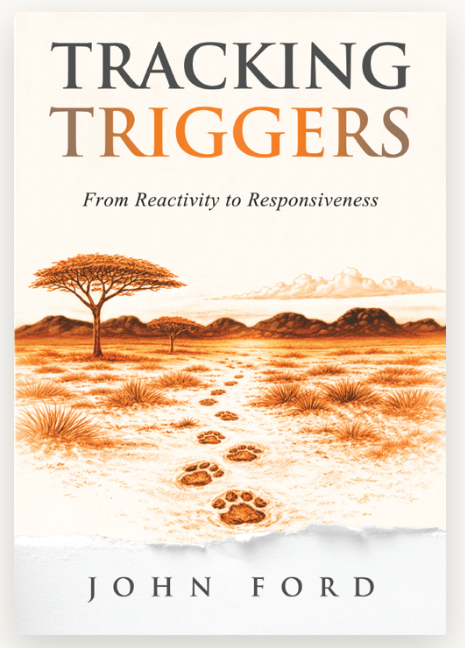
You have seen the cover. Here is what is inside it. Every chapter opens on an illustration, thirteen in all, one for the introduction, one for each chapter, and one for the conclusion, each paired with the voice that opens it. Before the book reaches your hands, I wanted you, my Inner Trackers, to walk the trail in pictures. Take your time. Read them the way you would read tracks in the sand.
Introduction
The Track Within
“I don’t know where we’re going, but I know exactly how to get there.”
Tracker Rhenius, in Boyd Varty, The Lion Tracker’s Guide to Life
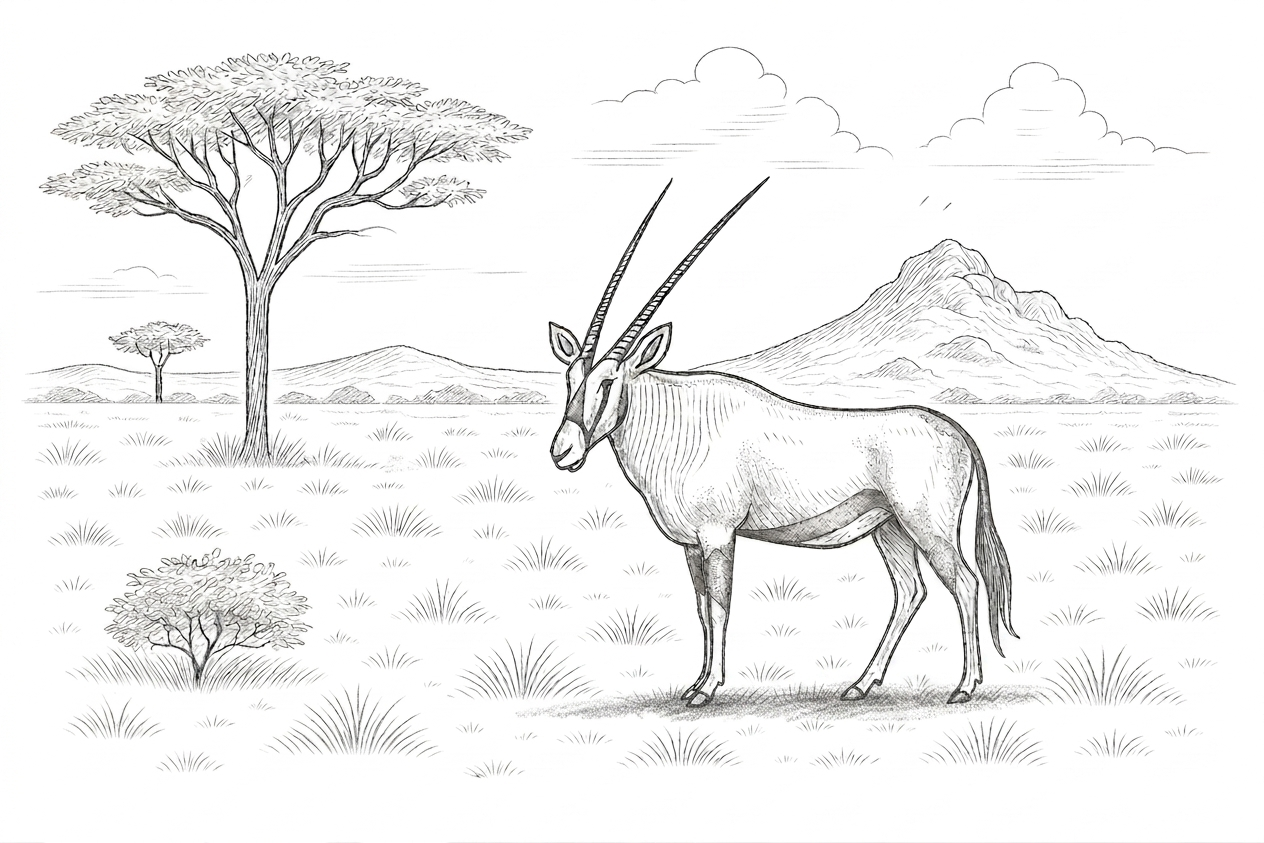
A gemsbok stands in the open country, unhurried, entirely at home in a landscape that rewards patience. This is where the book begins, on the day in the Kalahari when I watched a tracker move across the land and felt something open in me. Tracking, I began to sense, was never about the catching. It was about learning to read the signs, the ones outside us and the ones within.
Chapter One
The First Track: What Is a Trigger?
“To find the lion, you must also follow yourself.”
Boyd Varty
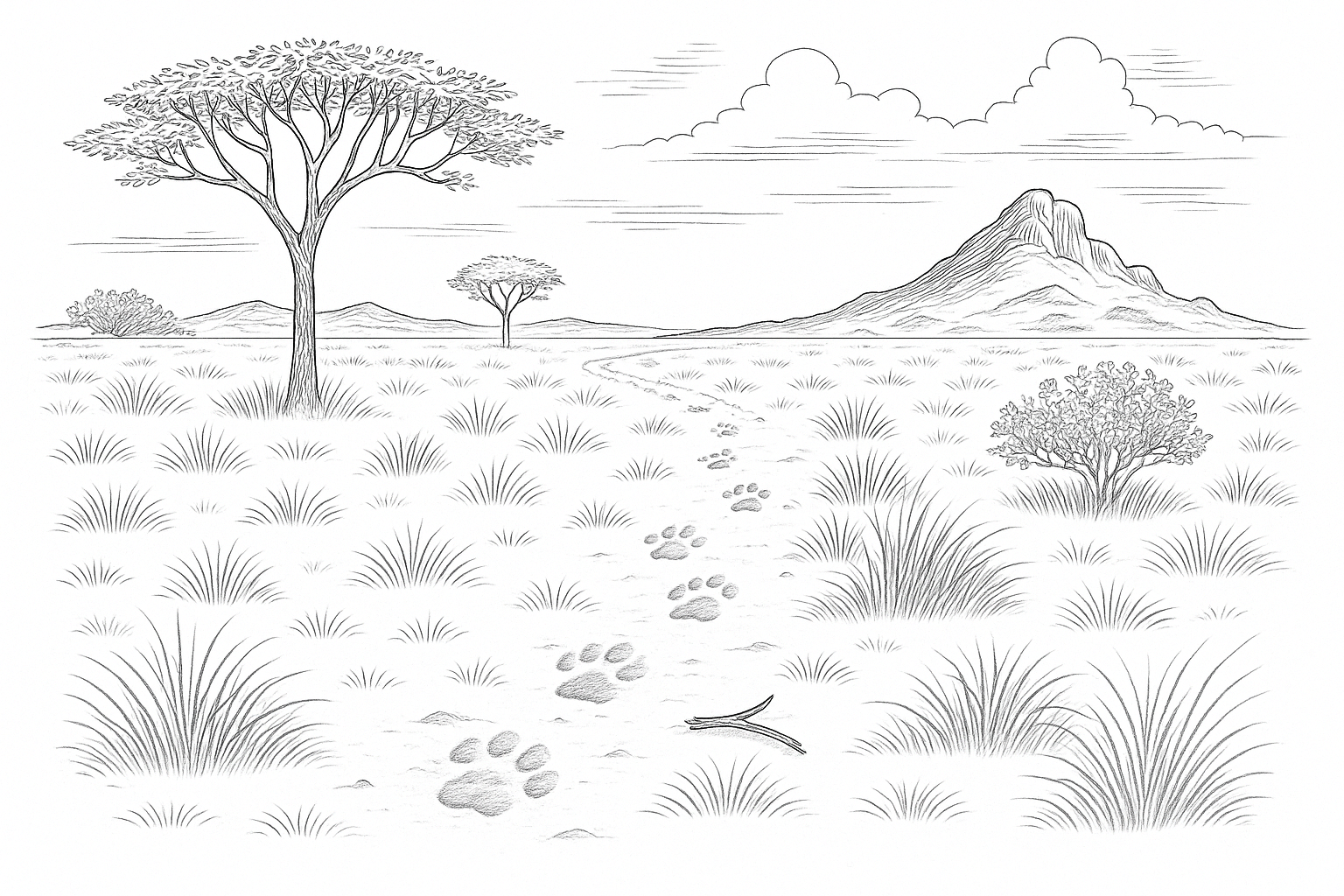
Lion tracks cross the sand, one print after another, leading toward clarity. A trigger is one of these prints, an event outside you or within that activates a reaction. Being triggered is the state that follows, when something old and unintegrated stirs beneath a present moment. It is not a flaw to fix but an experience to move through, a sign worth following, because the trail leads inward, to what is asking to be felt.
Chapter Two
The Three-Part Trigger: How Reactions Take Root
“Your nervous system is a tracker; it’s always asking, ‘safe or not safe?’”
Deb Dana
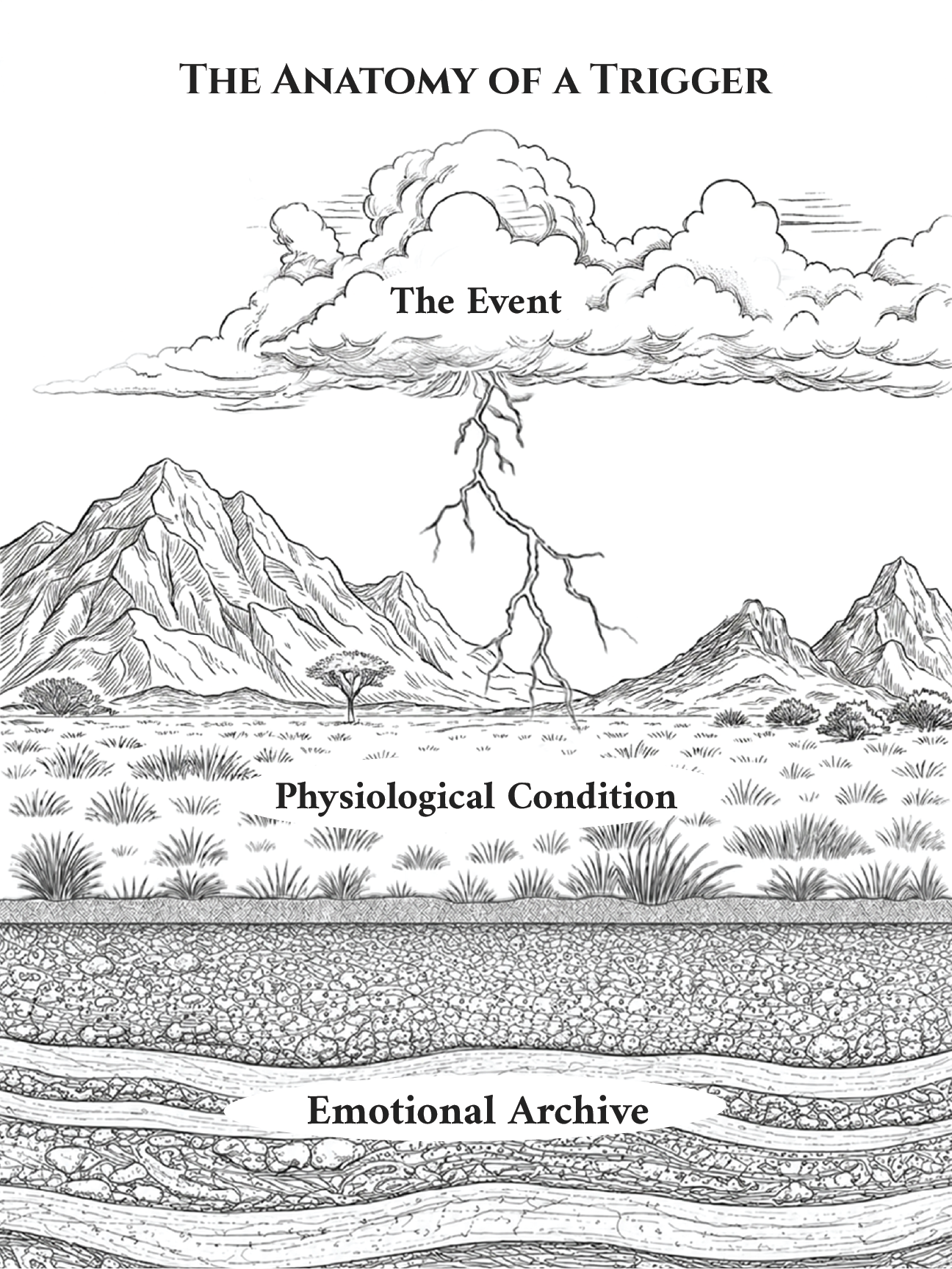
This is the anatomy of a trigger, three parts at work beneath a single reaction. At the surface is the event, arriving like a storm breaking overhead. Nearer the ground lies your physiological condition, how rested or depleted you are, which decides how hard the strike lands. Far below is the emotional archive, the residue of all you have lived, encoded and waiting beneath awareness. The reaction rises from all three at once, never from the storm alone.
Chapter Three
Recognition and Regulation: Returning to Center
“In that space is our power to choose our response. In our response lies our growth and our freedom.”
Viktor E. Frankl, Man’s Search for Meaning
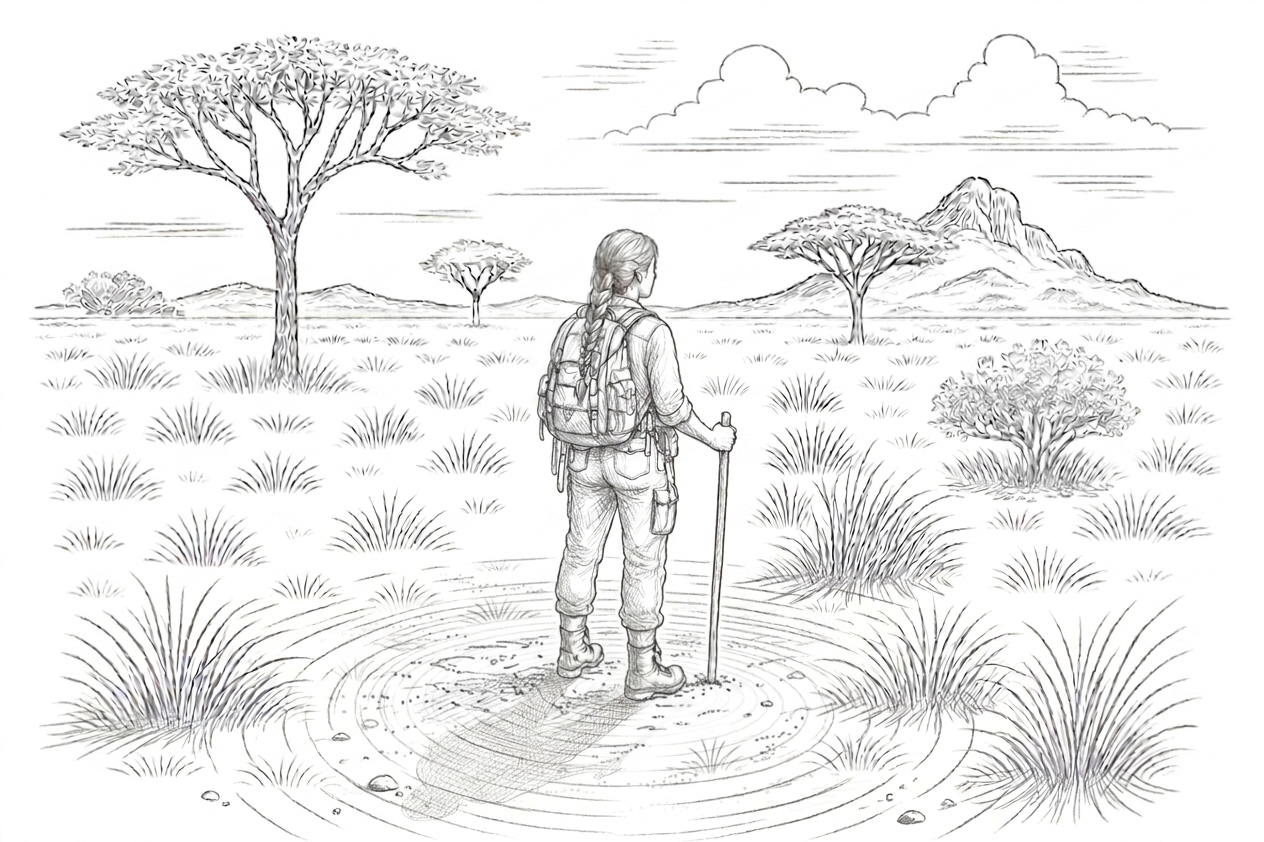
Stand still long enough and the ground seems to settle into rings around you. This is the work of recognition and regulation: noticing that you have been triggered, then finding your way back to center before you move again. The center is not a place you force. It is a place you return to.
Chapter Four
The Stories We Tell: Tracking Thoughts and Feelings
“The stories we tell ourselves about our pain shape our experience of it.”
DailyGood, inspired by Maria Popova
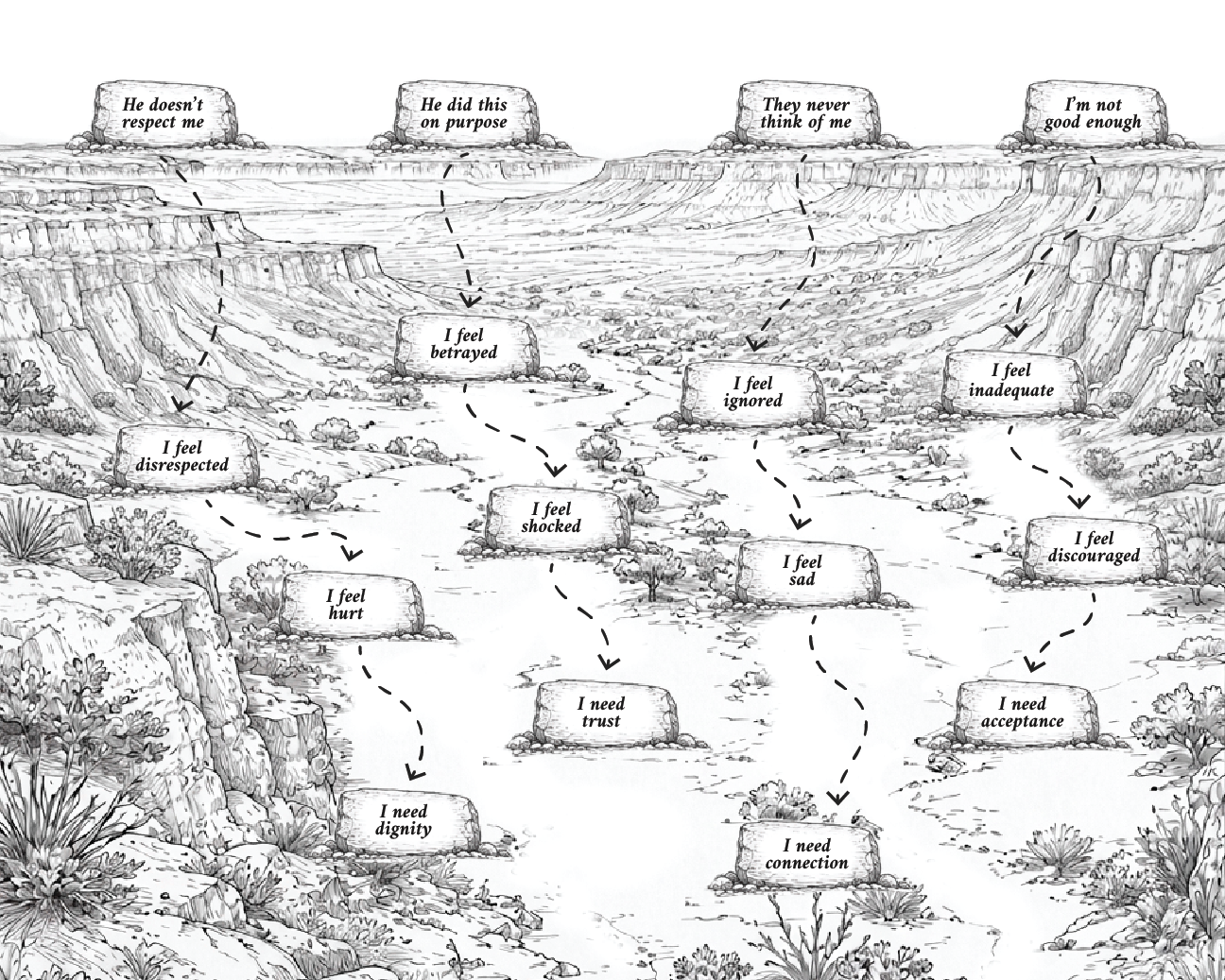
The mind lays down markers across the canyon. High on the rim sit the assumptions, he doesn’t respect me, he did this on purpose. The dashed trail leads down through the storied feelings, disrespected, betrayed, ignored, toward what waits lower still: the need for dignity, for trust, for connection. Every story is a track. Followed with care, it leads somewhere true.
Chapter Five
Feelings and Needs: Where Storied Feelings Point
“Every message, regardless of form or content, is an expression of a need.”
Marshall Rosenberg
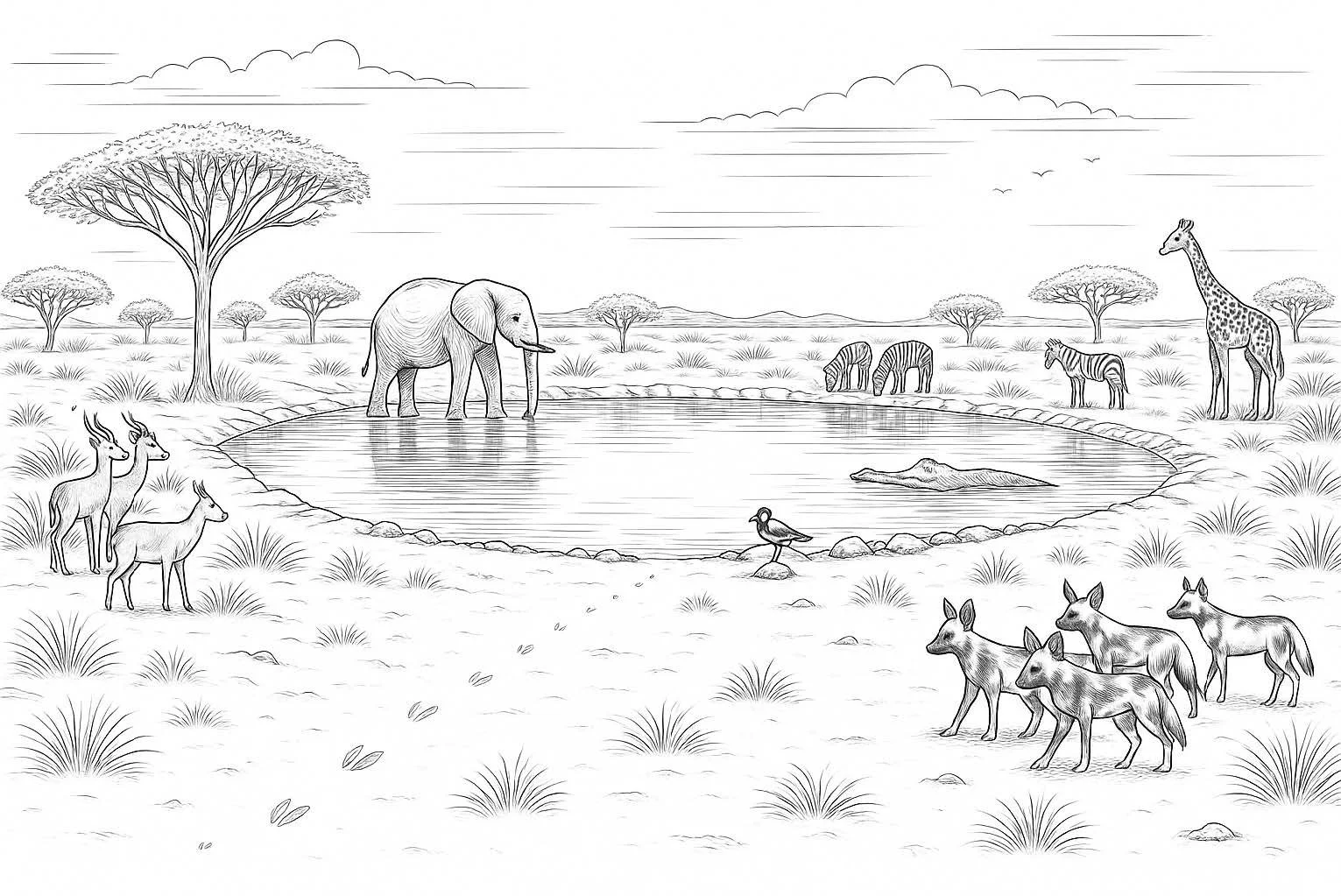
The watering hole is where the feelings gather, and each creature is a family of them. The plover at the water's edge carries the gateway emotions, surprise, shock, and startle, the first to arrive. The elephant holds the big three, anger, sadness, and fear. Half-submerged, the crocodile is guilt, shame, and pride, the guardians of belonging, living in both worlds at once, the seen and the submerged. The wild dogs, social and interdependent, are the connecting feelings that move as a pack. And all of it rests within the wider environment, the whole living field of feeling we are always standing inside.
Chapter Six
Feel and Act Anew: The Work of Integration
“We do not heal by understanding the past. We heal by being present with what the past left in us.”
Michael Brown, The Presence Process
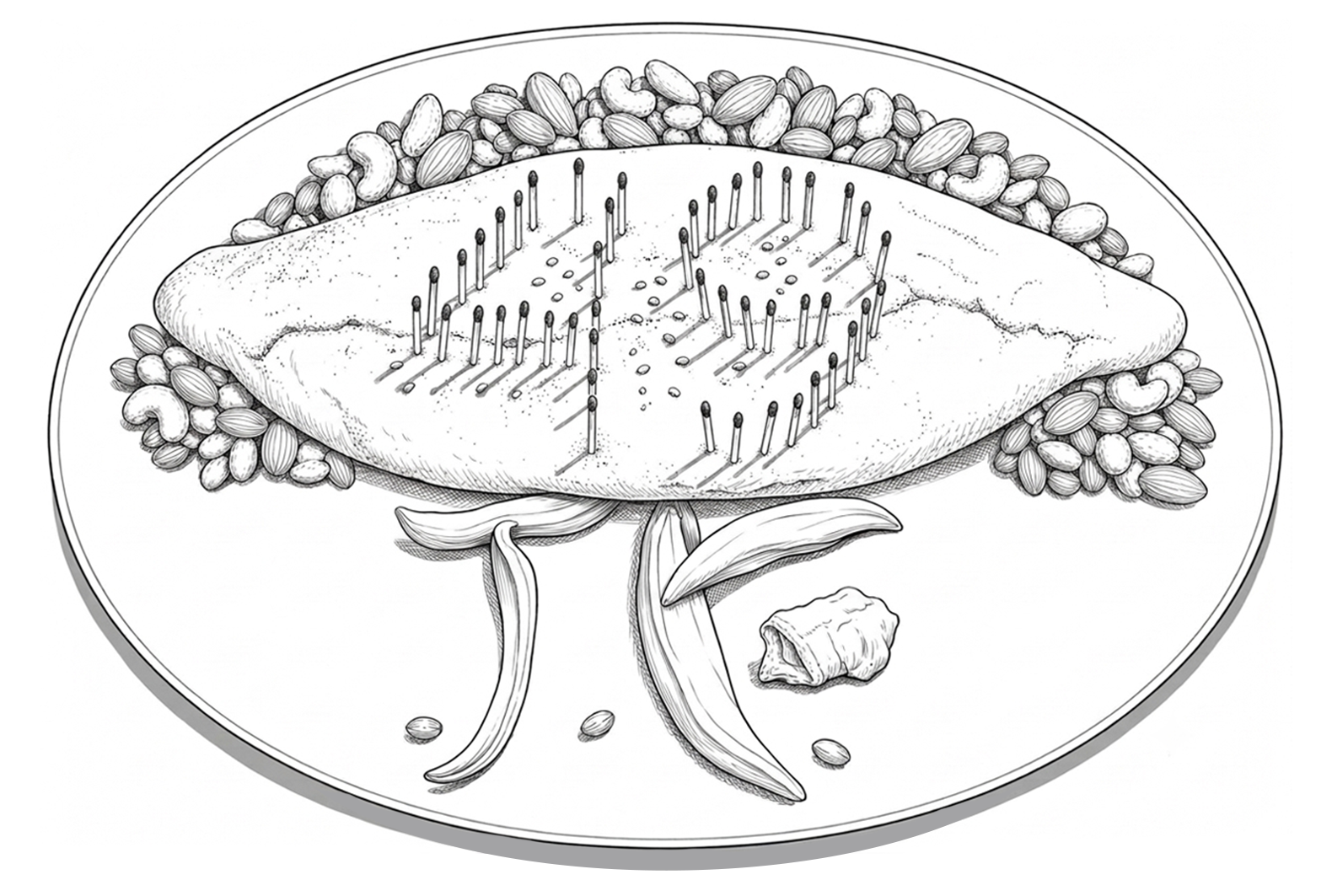
This one is a loaf of bread that I turned into a cake. It marks a birthday when the chocolate cake I was hoping for never arrived, one of the triggering moments I share in this chapter. The old pattern would have been to withdraw, to act as though I was above needing it, to hold the hurt in silence. Instead, I decorated the bread with seeds and nuts, spelled my initials in dried mango, stood matches in for candles, and asked my mother and sisters to celebrate with me. They joined in gladly, and later one of my sisters baked a real chocolate cake. Integration did not come from understanding the old disappointment. It came from the disconfirming experience the day gave me: that I could express what I needed and stay in connection, and nothing broke.
Chapter Seven
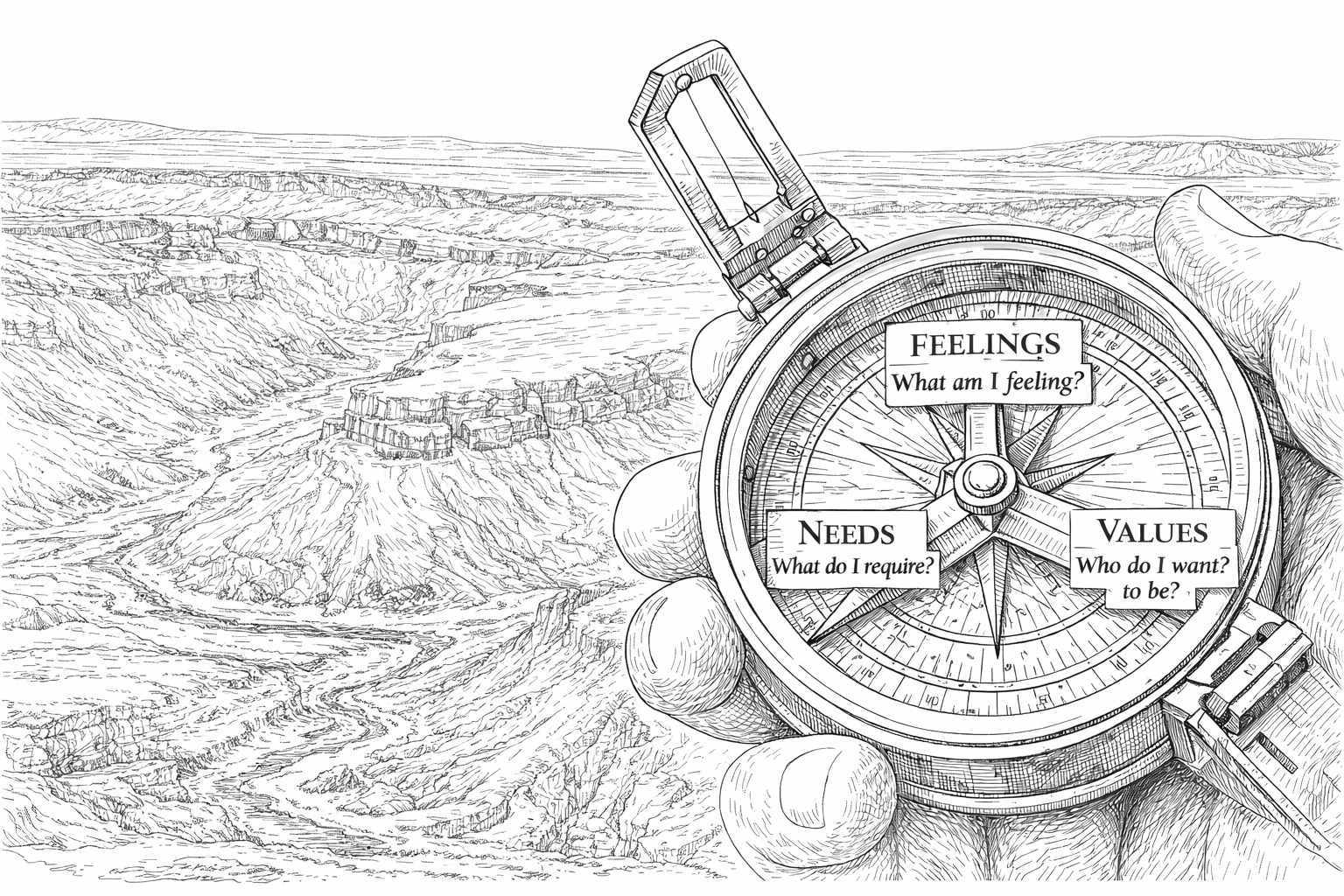
The Tracker’s Compass: Feelings, Needs, and Values as Guides for Conscious Action
“I can afford to look at myself directly, risk the pain of experiencing who I am not, and learn to savor the sweetness of who I am.”
Audre Lorde, Sister Outsider
A hand holds a compass out over the canyon. Its bearings are not only north and south but three questions: What am I feeling? What do I require? Who do I want to be? Feelings, needs, and values are the tracker's compass. When the terrain is confusing and the old trails pull, they point the way toward conscious action.
Chapter Eight
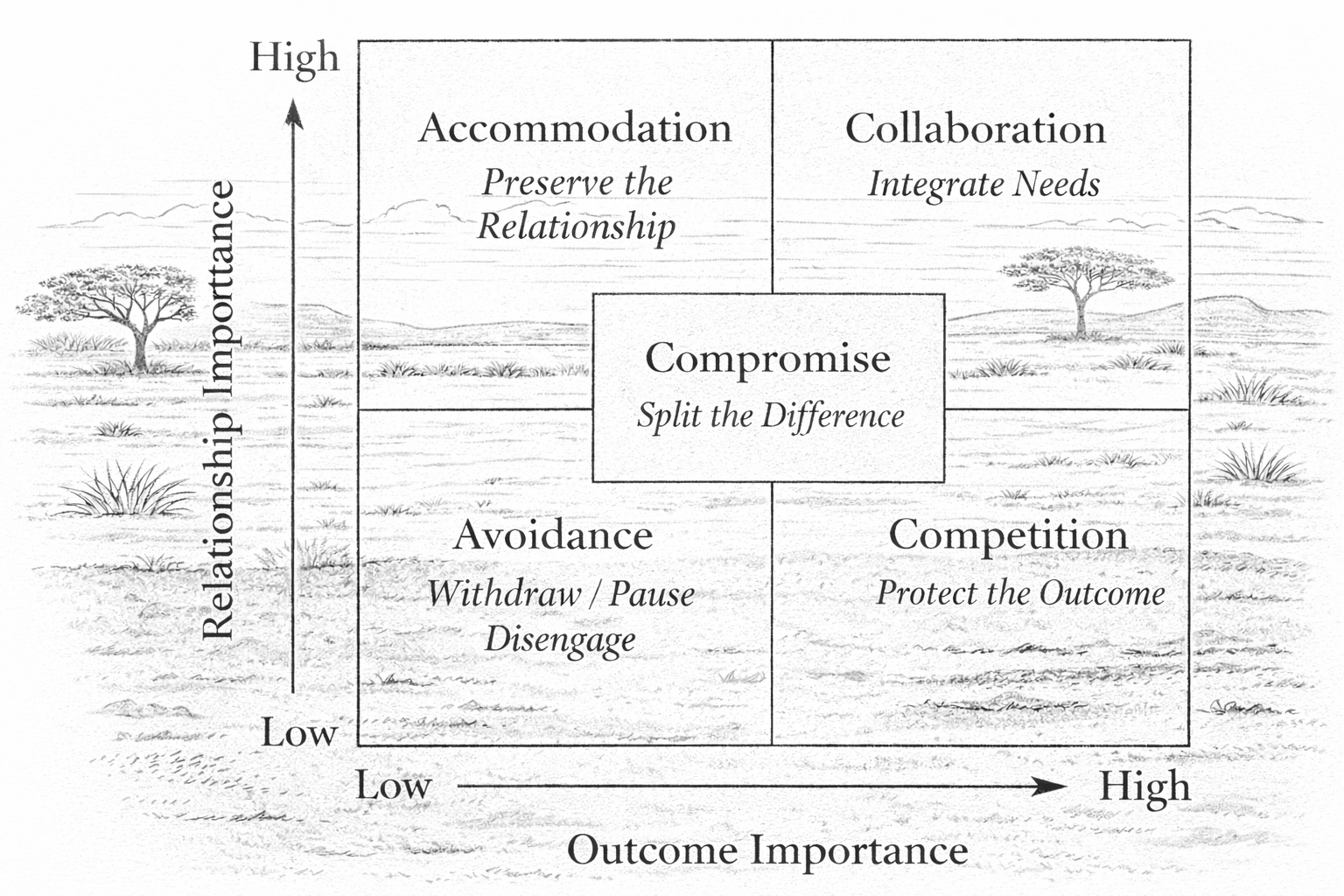
Choosing Your Path: From Survival Reaction to Conscious Response
“Knowing is not enough; we must apply. Willing is not enough; we must do.”
Johann Wolfgang von Goethe, Wilhelm Meister’s Journeyman Years
Every conflict offers more than one path. So, we can avoid, accommodate, compete, compromise or collaborate. Under pressure most of us do not choose among them. We default, reaching for the one that once kept us safe. The work is to notice that reach, to weigh what the relationship asks against what the outcome requires, and to choose the path this moment needs, moving from survival reaction to conscious response.
Chapter Nine
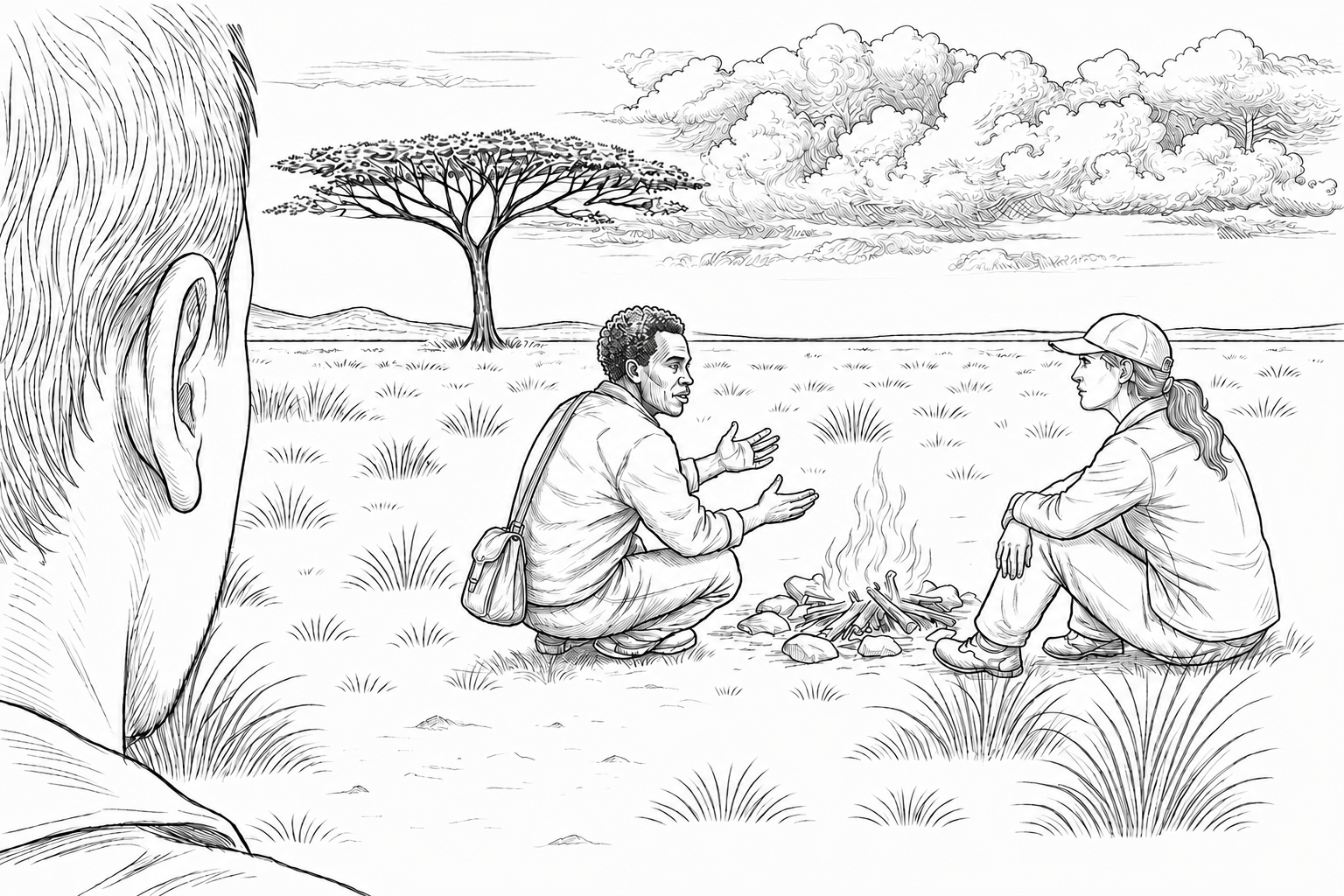
Listening and Empathy: Tracking the Trail of Another’s Experience
“The most basic and powerful way to connect to another person is to listen.”
Rachel Naomi Remen
Two people talk at a small fire, one speaking with open hands, the other listening, while close in the foreground an ear is turned fully toward them. Listening is the first cooperative act. It is not passive. When a person feels truly received, the guard softens and the body eases, and that felt safety is where trust begins. To listen well is to track another's trail, following their meaning until they know they have been met.
Chapter Ten
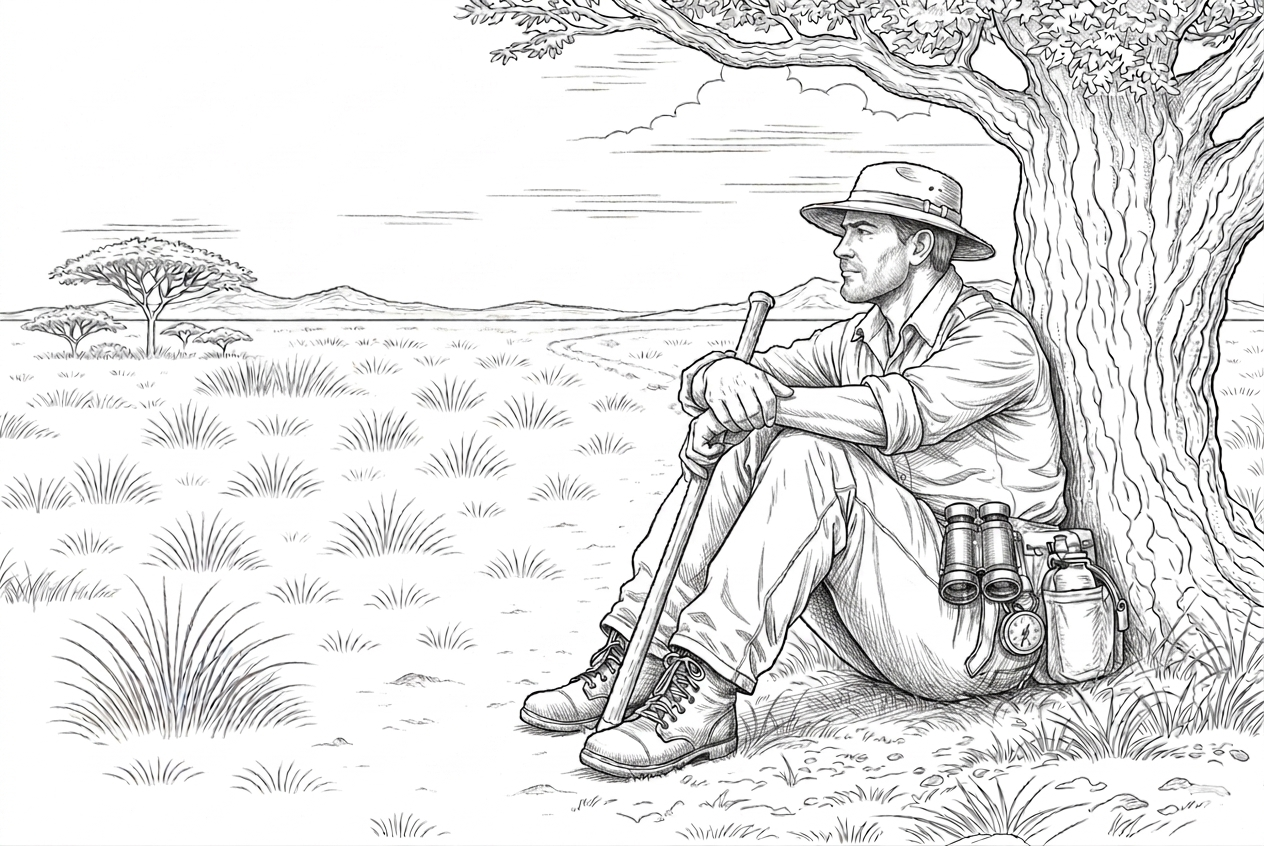
Expression as Assertion: Speaking Your Truth with Courage, Clarity, and Compassion
“Clear is kind. Unclear is unkind.”
Brené Brown
The tracker sits in the shade of the tree, hat low against the sun, his kit around him: a walking stick, binoculars, a water bottle, a compass, each chosen for the country ahead. This chapter hands you a kit of your own. If listening was the first act, this is the second, speaking your truth so it can be heard. Here are the tools for it: naming what you saw and what you need, setting a boundary, saying no without attack. Assertion is not the loudest voice but the clearest, standing for yourself while staying in connection.
Chapter Eleven
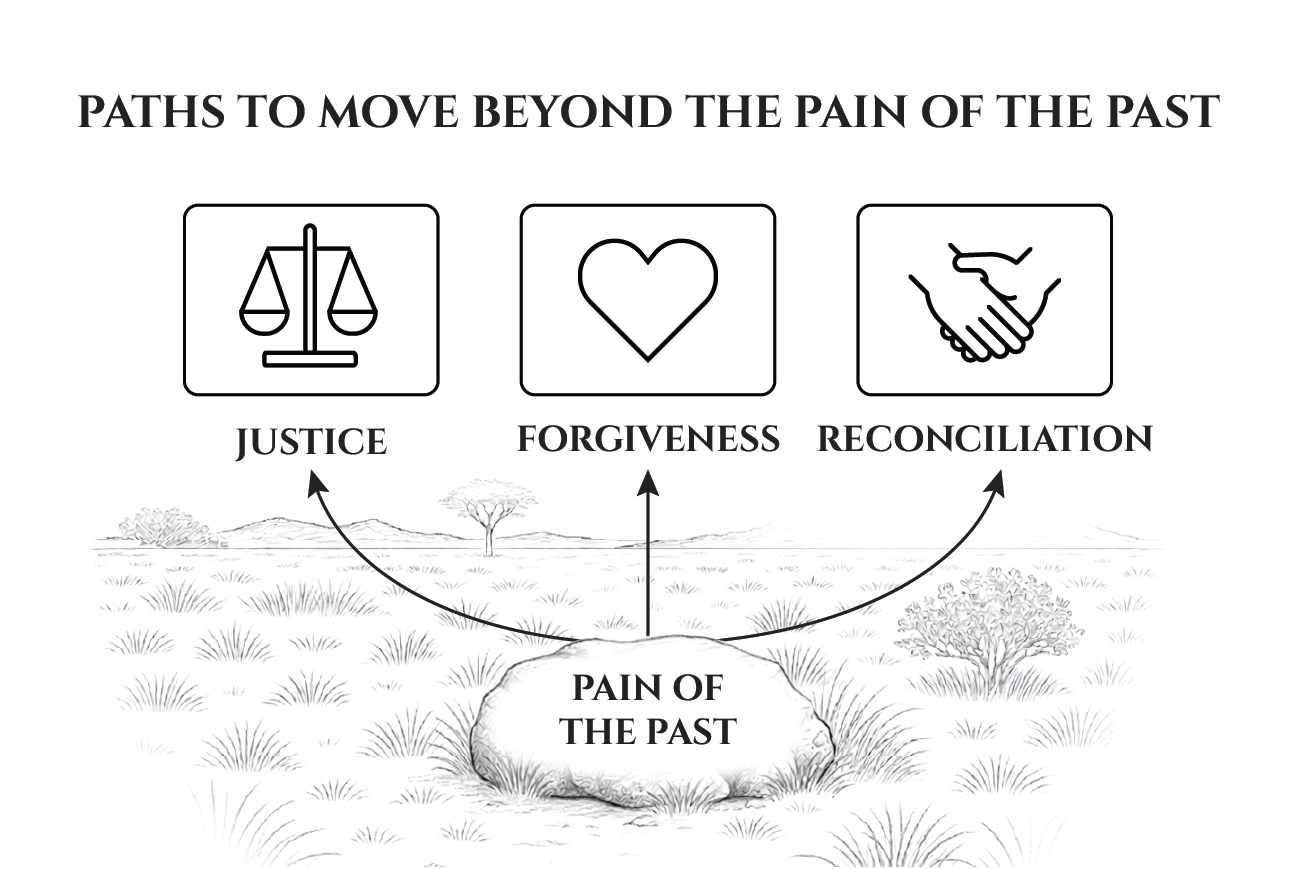
The Three Paths: Justice, Forgiveness, and Reconciliation
“Peace is not a dream. It is hard work.”
Leymah Gbowee
From a single stone, the pain of the past, three paths rise. Justice seeks to name what happened and set it right. Forgiveness loosens the grip of the grievance so your own heart can move again. Reconciliation looks for the way back to each other. They are not one road, and you are not required to walk them all. Each is a way to move beyond the pain that remains.
Conclusion
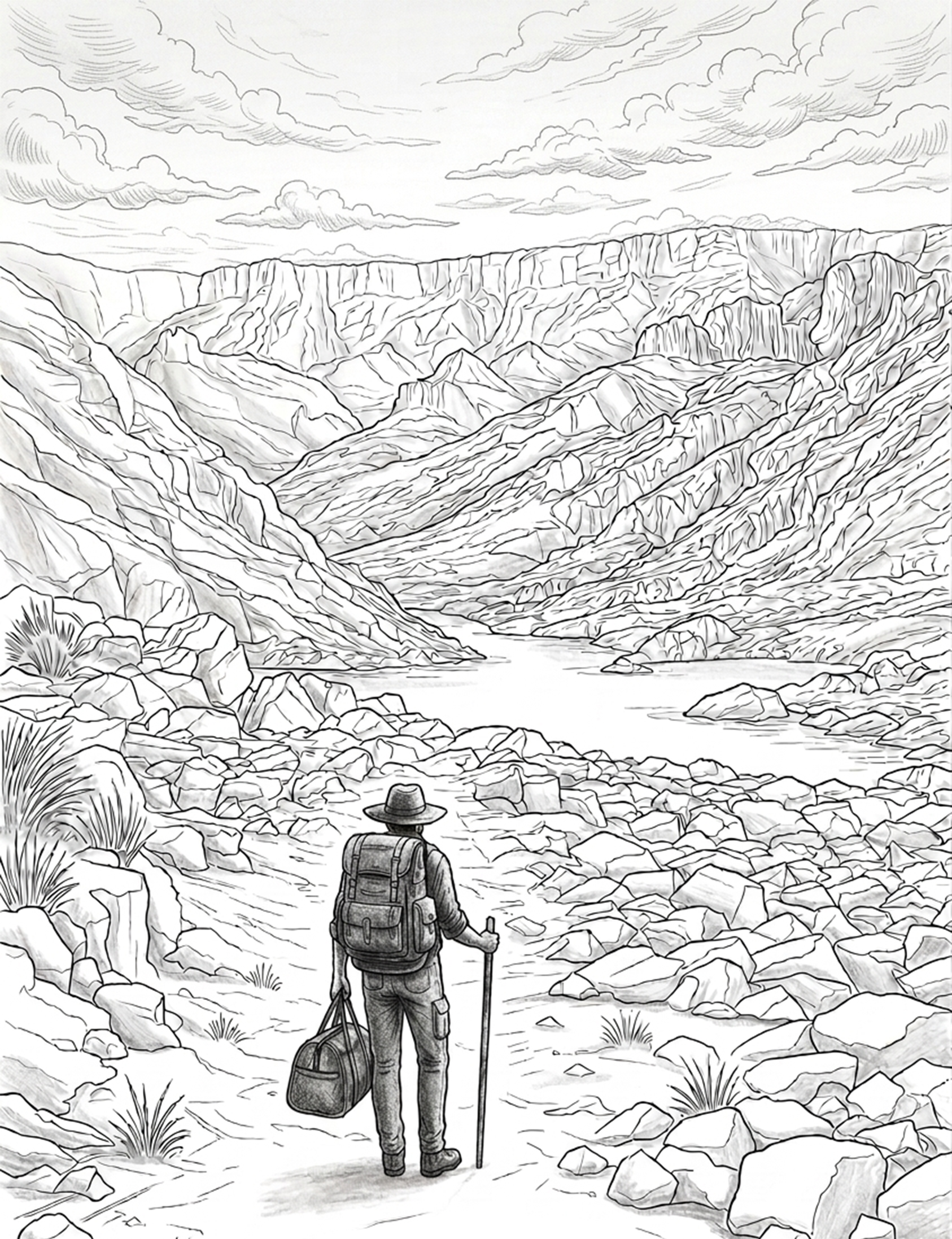
Becoming the Tracker of Your Own Life
“I don’t know where we’re going, but I know exactly how to get there.”
Renias Mhlongo
Down in the Fish River Canyon, pack shouldered and staff in hand, a lone figure stands on the canyon floor, the river ahead and the great walls rising all around. This is where the trail has been leading, not up to a summit but down into the heart of the country, to a way of moving through the world. You came reactive. You leave responsive, the tracker of your own life, reading the signs before the rupture and tracking your way back each time you lose the trail. Not arrival. Just the next step, and the next.